

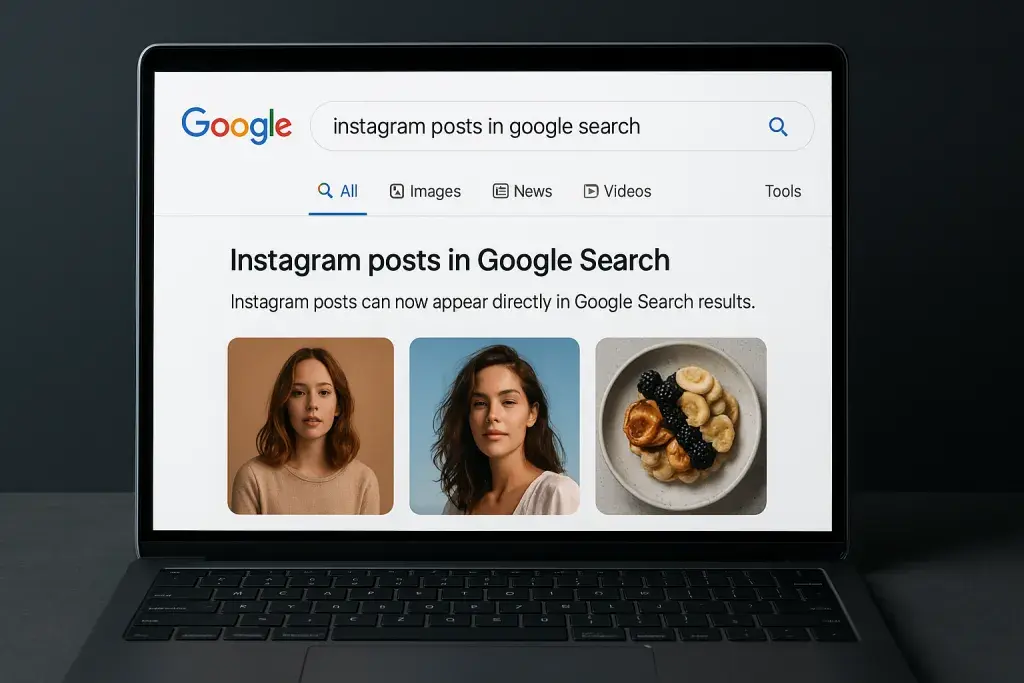
A photo captioned three years ago on a small bakery's Instagram account can now surface in a search result faster than the bakery's own website loads. That's not a hypothetical anymore. Instagram content, once locked almost entirely inside the app's own ecosystem, is increasingly showing up in general web results, and the shift is quietly rewriting the rules for anyone who posts, markets, or manages a brand presence online.
If you've typed a business name or a creator's handle into a browser recently and noticed an actual Instagram post - not just a profile link - sitting in the results, you've witnessed this firsthand. It's part of a broader change in how visual content gets crawled and surfaced outside the app, and it means a single post can now generate visibility long after it has scrolled out of anyone's feed. For businesses trying to make the most of this exposure, engagement signals attached to a post matter more than they used to, which is why some brands look into options like boost instagram likes to strengthen how a post performs before it gets picked up and displayed to a wider audience.
This piece walks through what the change actually involves, how the mechanics work behind the scenes, and what practical steps creators and businesses should take now. Whether you run a shop, manage a brand account, or simply post for fun, the way your content travels beyond Instagram has changed - and it's worth understanding exactly how.
What "Instagram Posts in Google Search" Actually Means
At its core, this refers to Instagram posts - individual photos, carousels, sometimes captions and comments - appearing directly in general web search results, rather than staying confined to the app or requiring someone to already follow the account. Previously, a search for a business or public figure might return their Instagram profile page as a link. Now, specific posts themselves can appear, complete with images, captions, and sometimes engagement counts, depending on the account's settings and content type.
This is a distinct development from older profile indexing, which has existed for years and simply pointed searchers to a profile URL. What's different now is granularity: individual pieces of content, not just account pages, are being surfaced. That means a post from months or years ago can resurface at any time, based on relevance rather than recency.
- Only public accounts are eligible - private profiles remain excluded entirely.
- Not every post type qualifies; static images and carousels are more commonly indexed than ephemeral content.
- Captions, hashtags, and any attached alt text influence whether and how a post appears.
- Engagement signals, such as likes and comments, can affect how prominently a post is displayed.
Understanding these instagram posts in google search details matters because it changes how creators and brands should think about every single post - not as disposable content, but as a small, permanent asset with its own discoverability profile.
The Instagram Posts in Google Search Update: What Changed
The shift toward broader indexing didn't happen overnight, and it wasn't a single announcement so much as a gradual expansion of how much Instagram content became visible outside the app. Earlier versions of this kind of indexing were limited, inconsistent, and often restricted to specific markets or account types. The current phase represents a more deliberate and consistent approach, where public content is treated as genuinely crawlable material rather than an occasional exception.
Timeline of the Rollout
The expansion has come in stages rather than a single cutover. Early signs appeared as isolated instances of posts showing up in results, often inconsistently and only for high-profile accounts or viral content. Over time, this behavior became more predictable and widespread, extending to smaller business accounts and everyday creators rather than only major public figures. Because the rollout has been incremental, some users noticed the change months before others, which explains why reactions to this instagram posts in google search update have been scattered across social media and marketing forums rather than tied to one specific date.
Why Instagram Made This Move
The motivation behind this shift is fairly straightforward: visibility outside the app translates into more traffic back into it. Instagram, like most platforms with a business model built on engagement and advertising, benefits when content is discoverable in more places, not fewer. Competition from other short-form and visual platforms has also pushed Instagram to find new ways to keep content relevant and circulating, rather than letting posts disappear into an endless, ephemeral feed.
| Aspect | Before the Update | After the Update |
|---|---|---|
| Visibility outside the app | Mostly limited to profile links | Individual posts can appear directly |
| Content lifespan in results | Short, tied to recency | Extended, based on relevance and engagement |
| Account requirements | Public accounts, limited consistency | Public accounts, broader and more consistent indexing |
| Content types indexed | Rarely individual posts | Photos, carousels, and captions more commonly |
How Instagram Posts Get Indexed
Not every public post ends up surfacing in results, and understanding the mechanics behind this helps explain why some content travels further than others. Indexing depends on a combination of account settings, content structure, and the signals attached to a given post at the time it's crawled.
Requirements for Indexing
The baseline requirement is a public account - private profiles are excluded by default, regardless of content quality or engagement. Beyond that, business and creator accounts tend to be indexed more reliably than personal accounts, likely because they're structured with more consistent metadata and public-facing information. Content that violates platform guidelines, or accounts flagged for policy issues, are unlikely to appear regardless of other factors.
Role of Captions, Hashtags, and Alt Text
Captions function similarly to descriptive text on any web page - they give context to what the image contains and what the post is about. Hashtags add topical signals, helping associate a post with a broader theme or subject. Alt text, often overlooked because it's primarily designed for accessibility, plays a quiet but meaningful role here too, since it provides a literal description of the image that can be read and processed even without visual analysis.
- Public account status, since private profiles are never eligible.
- Clear, descriptive captions that explain the content of the post.
- Relevant hashtags that connect the post to a recognizable topic or niche.
- Alt text that accurately describes the image.
- Consistent engagement, which signals relevance and activity.
A caption like "New matcha latte, ask about it today" gives far more context than a single emoji or no caption at all - and that difference now carries weight well beyond the app itself.
Practical Guide: How to Optimize Your Instagram Posts
Once you understand the mechanics, the next logical step is adjusting how you approach posting. This isn't about rewriting your entire content strategy - it's about a handful of consistent habits that make each post more discoverable without changing your creative direction.
Step-by-Step Optimization Checklist
- Switch to a business or creator account if you haven't already, since these tend to be indexed more consistently.
- Write captions that clearly describe what's in the image or what the post is about, rather than relying purely on humor or vague phrasing.
- Add alt text manually for key posts, especially those tied to products, services, or important announcements.
- Use a small number of specific, relevant hashtags rather than a long list of generic ones.
- Encourage genuine engagement through questions, clear calls to action, or timely topics.
- Review older high-performing posts and update captions or alt text where possible.
Common Mistakes to Avoid
- Keeping accounts private while expecting content to be discoverable outside the app.
- Stuffing captions with unrelated keywords in an attempt to appear in more results.
- Ignoring alt text entirely, missing a simple opportunity to add context.
- Posting inconsistently, which weakens the engagement signals tied to an account.
- Assuming every post will be indexed regardless of quality or public settings.
None of these steps require drastically changing your voice or aesthetic. They simply ask you to be more deliberate about the text surrounding your visuals, since that text is doing more work now than it used to.
What This Means for Businesses, Creators, and Marketers
The practical impact of this shift depends heavily on who you are and what you're trying to achieve. For small businesses, it opens a genuinely useful new channel for discovery - someone doesn't need to already know your Instagram handle to find your content anymore. For creators, it means older posts can continue generating attention long after their original engagement window has closed.
Opportunities: Increased Organic Reach
A well-optimized post about a product, service, or event can now be discovered by someone who never would have searched for your account directly. This is particularly valuable for local businesses, where a single well-captioned photo of a menu item or storefront might reach someone actively looking for exactly that.
Risks: Privacy and Content Control Concerns
The same mechanism that helps discovery also raises legitimate concerns. Older posts, including ones a creator might now consider outdated or embarrassing, can resurface unexpectedly. Someone who posted casually years ago without considering future visibility may find that content circulating in contexts they never anticipated.
| Impact Area | Benefit | Potential Downside |
|---|---|---|
| Brand discovery | New audiences find content without prior awareness | Loss of control over which posts represent the brand first |
| Content longevity | Older, high-quality posts continue generating value | Outdated information may resurface without context |
| Personal accounts | Increased visibility for creators building an audience | Reduced privacy for casual or personal posts |
Consider a small ceramics studio that posted a detailed, well-captioned photo of a handmade mug eighteen months ago. That single post, if properly captioned and public, can still draw in someone searching for handmade ceramics today - a level of longevity that simply didn't exist when content was confined strictly to the feed and follower base.
Staying Updated: How to Track Future Changes
Because this behavior has evolved gradually rather than through one clean announcement, it's reasonable to expect further adjustments ahead. Staying informed doesn't require constant monitoring, but it does help to check in periodically through reliable channels rather than relying on secondhand claims circulating on social platforms.
- Official statements or blog updates from Meta regarding platform changes.
- Established digital marketing publications that track platform behavior over time.
- Direct observation of your own account's performance and how your posts appear when searched.
Rather than chasing every rumor about the instagram posts in google search latest developments, a simpler approach works better: keep your account public, keep your captions clear, and periodically check how your own content behaves when someone searches for it directly.
Questions and Answers
Do I need a business account for my posts to appear in search results?
A personal public account can still be indexed, but business and creator accounts tend to show up more consistently because they include more structured, public-facing information. If discoverability matters to you, switching to a business or creator account is a reasonable step.
Can I stop a specific post from appearing outside the app?
Making an account private removes all its content from external indexing, but that also limits general discoverability. Some platforms offer content-level privacy controls, so checking your account's specific settings for individual posts is worth doing if you're concerned about a particular piece of content.
Does this affect Stories or only regular feed posts?
Feed posts, particularly photos and carousels, are far more likely to be indexed than Stories, which are temporary by design and typically disappear within 24 hours unless saved as a Highlight. Highlights themselves may behave differently from standard Stories in terms of visibility.
Will old, low-quality posts hurt how my account appears in search?
An individual post's visibility is generally tied to its own signals - caption clarity, engagement, and alt text - rather than dragging down the entire account. Still, cleaning up captions on older posts or archiving ones you no longer want visible is a reasonable precaution if you're concerned about older content.
Is this feature the same everywhere, or does it vary by region?
Rollouts of this kind typically expand unevenly across regions and languages, meaning some users may notice this behavior more consistently than others depending on location. If you're not seeing your own posts appear despite meeting the basic requirements, regional variation is a plausible explanation.
Does having more likes or comments actually help a post get indexed?
Engagement appears to function as one signal among several, suggesting that a post's relevance and activity level play a role in whether it surfaces prominently. It isn't the only factor, but combined with clear captions and proper account settings, stronger engagement generally supports better visibility.


